Prepare a Run
This procedure exemplarily shows how to prepare a run. Parameters as shown in the screenshots may vary, depending on the system installed.
WARNING
Toxic, flammable and hazardous solvents, samples and reagents
The handling of solvents, samples and reagents can hold health and safety risks.
- When working with these substances observe appropriate safety procedures (for example by wearing goggles, safety gloves and protective clothing) as described in the material handling and safety data sheet supplied by the vendor, and follow good laboratory practice.
- Do not use solvents with an auto-ignition temperature below 200 °C (392 °F). Do not use solvents with a boiling point below 56 °C (133 °F).
- Avoid high vapor concentrations. Keep the solvent temperature at least 40 °C (72 °F) below the boiling point of the solvent used. This includes the solvent temperature in the sample compartment. For the solvents methanol and ethanol keep the solvent temperature at least 25 °C (45 °F) below the boiling point.
- Do not operate the instrument in an explosive atmosphere.
- Do not use solvents of ignition Class IIC according IEC 60079-20-1 (for example, carbon disulfide).
- Reduce the volume of substances to the minimum required for the analysis.
- Do not use bottles that exceed the maximum permissible volume (2.5 L) as specified in the usage guidelines.
- Ground the waste container.
- Regularly check the filling level of the waste container. The residual free volume in the waste container must be large enough to collect the waste liquid.
- To achieve maximal safety, regularly check the tubing for correct installation.
Switch on the detector.
-
Fill the solvent bottles with adequate solvents for your application.
-
Place solvent tubings with bottle head assemblies into the solvent bottles.
-
Place solvent bottles into the solvent cabinet.
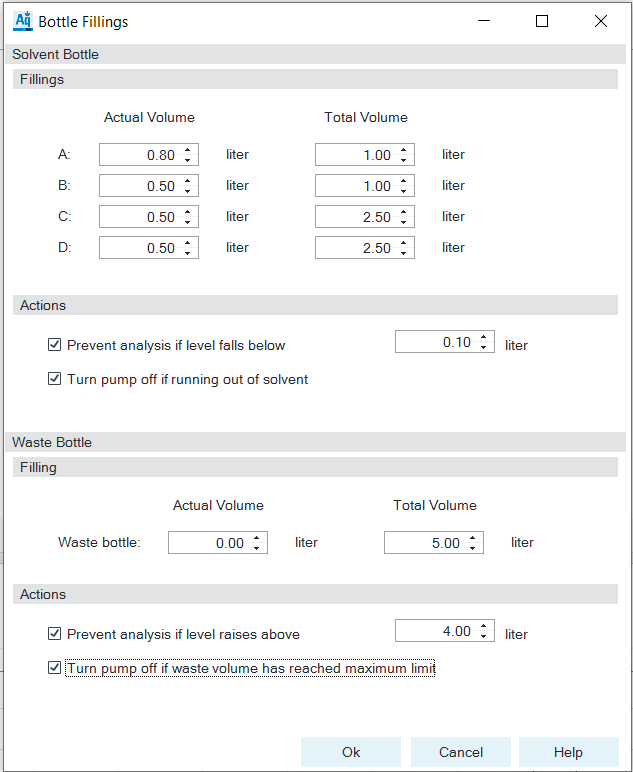
Solvent bottle filling dialog (in the software).
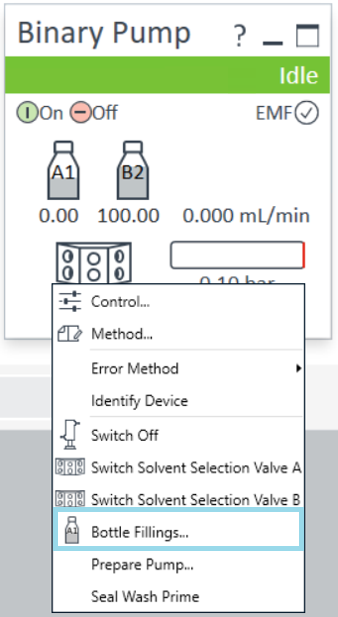
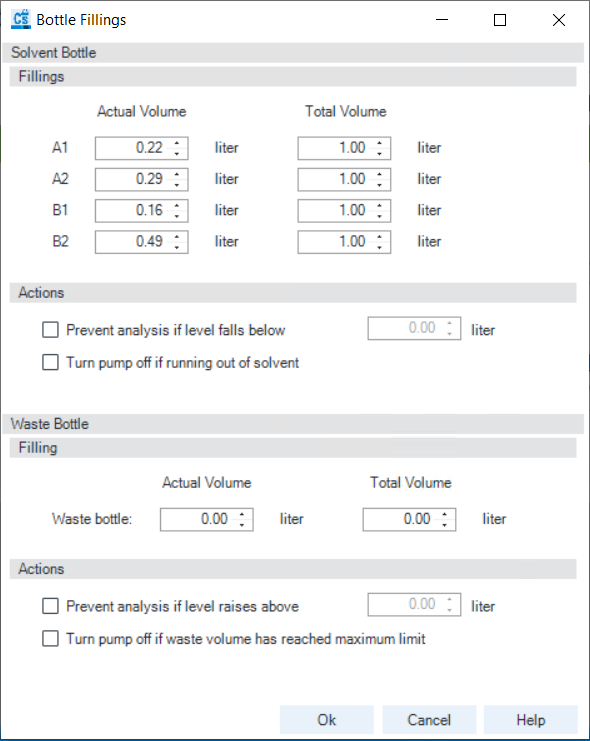
Solvent bottle filling dialog (in the software).
Purge the pump.
NOTE
For details on priming and purging, refer to the technical note Best Practices for Using an Agilent LC System Technical Note (InfinityLab-BestPractice-en-SD-29000194.pdf, SD-29000194).
-
Change solvent type if necessary.
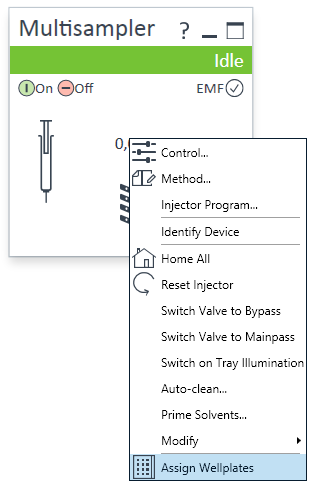
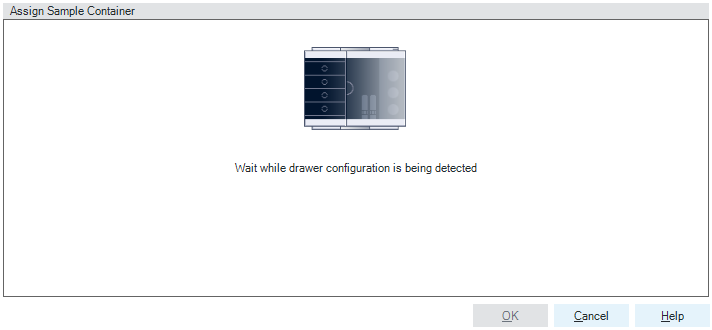
Choose the tray format of the sampler.
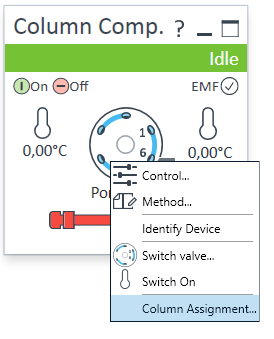
Add a new column.
-
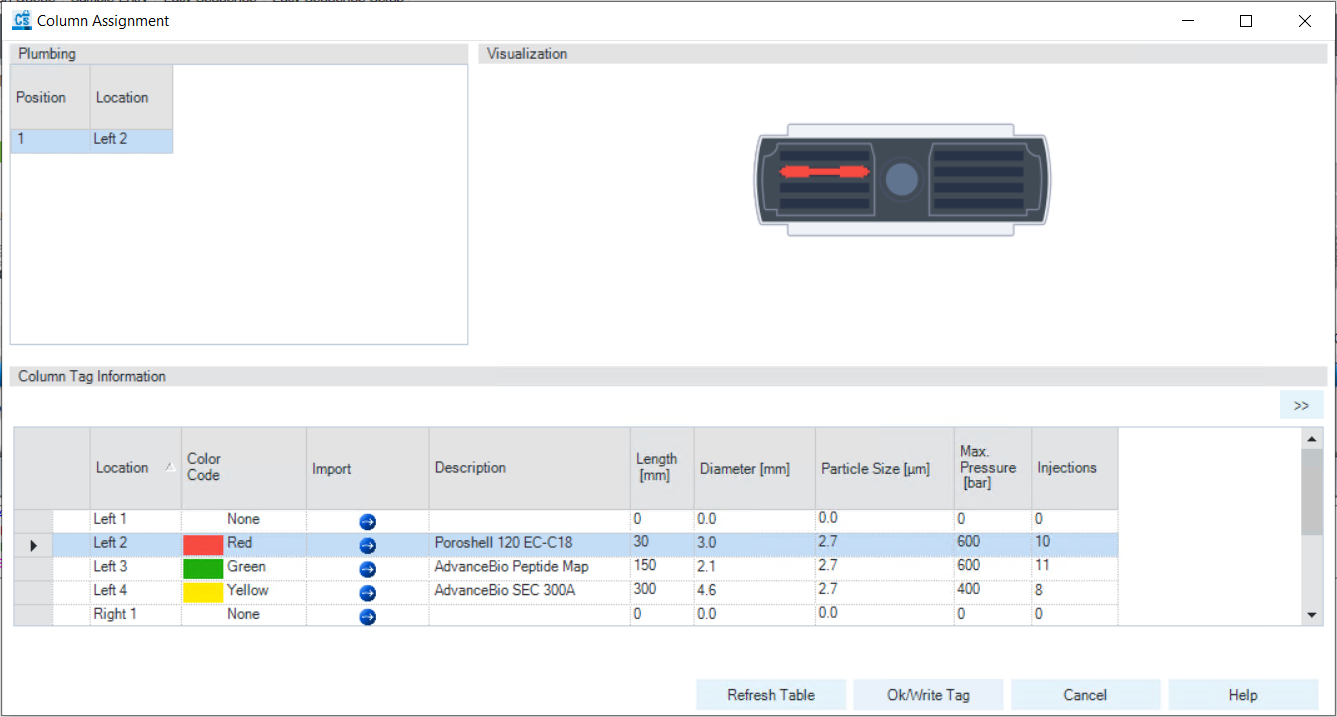
Enter the column information.
-
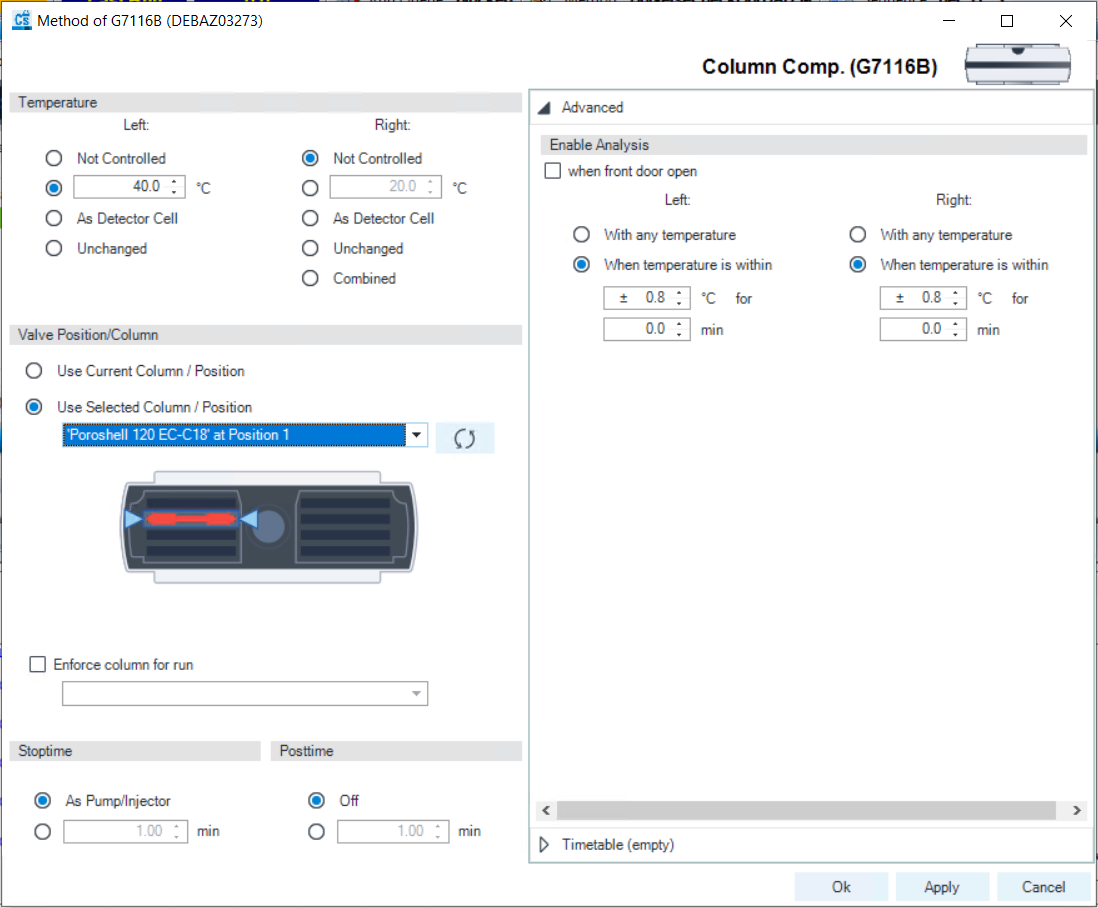
Select the column in the Method settings of the column compartment.
Set the detector parameters according to the needs of your method.
base-id: 4517687563
id: 45036000791392523